

(Not) Unto Us
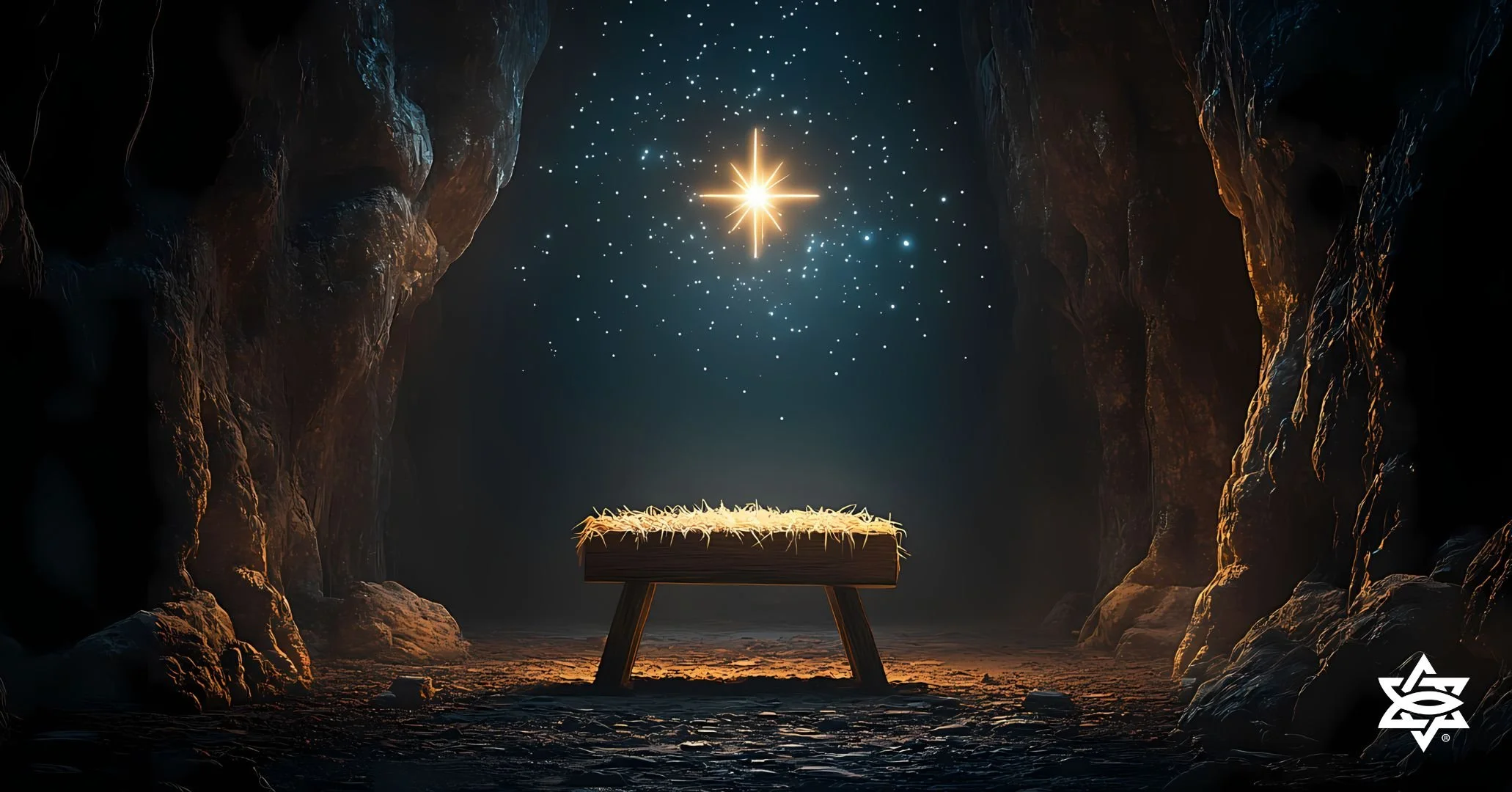
Celebrating Christmastime with kids brings the joys of wide-eyed wonder. Sparkling lights, festive songs, family gatherings, a dining table loaded with heaping dishes…. In many homes, a decorated Christmas tree is prominently displayed.
Does this scenario sound familiar? A child enters the room and sees colorfully-wrapped packages of various sizes under the tree. Curiosity captures the boy’s imagination. What’s in that big box, I wonder?
Irresistibly drawn by the pile of presents, the child approaches. Bending down, he peers intently at the gifts. Having been warned “DON’T TOUCH ANYTHING UNDER THE TREE!” by his parents, he knows he’s on dangerous ground. But he can’t resist. I have to know which of these presents is mine!
Ensuring no one is observing, he begins to examine the tags on the packages. Finding one addressed to himself, he picks it up and assesses the size, shape, and weight of the gift. He gives a gentle shake to hear if shifting the contents will offer a clue. Maybe if I just loosen the tape a little… after all, my name is on the tag.
It was true-life scenarios like this in our own childhoods that spurred my wife Lori to put a “secret code” on presents before placing them under the Christmas tree. In response to the plaintive “Which ones are mine?” queries, the answer was always the same: “You’ll have to wait until Christmas.”
Who doesn’t want to know the intended recipient of a desirable gift?
At this special season of the year, we return to the story of God’s greatest gift, the one the world so desperately needed. But before turning to the record in the Gospels, let’s set the background from the Old Testament.
The earliest chapter in human history is set in a perfect paradise. In the Garden of Eden, Adam and Eve lack nothing and have close communion with the Creator of the universe.
But the Deceiver appears on the scene and tempts them to disobey the single rule God had given our first parents. And in an instant, their disobedience changed everything. Sin entered the world and death by sin. Intimacy with the Holy One was broken.
In that context we read God’s prophetic word spoken to Satan in Genesis 3:15: “And I will put enmity between you and the woman, and between your seed and her seed; he shall bruise you on the head, and you shall bruise him on the heel.”
In the unfolding story that follows, we learn that the line of the promised descendant will go through Abraham. “In you all the families of the earth will be blessed,” God tells Abram in Genesis 12:3.
God chose that line to be traced through Abraham’s son, Isaac, then through Isaac’s youngest of the twin boys, Jacob, whom God named Israel. Of Jacob’s 12 sons, Judah is selected to be the one through whom the kings of Israel would come (see Genesis 49:10).
Generations later, the shepherd boy David, a direct descendant of Abraham through Judah, would be anointed king of Israel. God promised David an enduring kingdom (2 Samuel 7:8-16).
But within two generations, the Jewish nation was split into the northern kingdom of Israel and the southern kingdom of Judah. Powerful external enemies would threaten from the north and south. Internally, political intrigue caused instability. But the root problem was spiritual: the worship of false gods and their idols brought repeated warnings of God’s judgment through the prophets.
Among the most prolific of the prophetic voices was Isaiah. He not only foresaw the impending demise of the Davidic throne but also foretold the coming Son of David who would indeed establish the eternal kingdom. At Christmastime, we often hear this beautiful promise (sometimes accompanied by swelling choir voices in Handel’s Messiah) directly quoted from Isaiah 9:6-7:
For unto us a Child is born,
Unto us a Son is given;
And the government will be upon His shoulder.
And His name will be called
Wonderful, Counselor, Mighty God,
Everlasting Father, Prince of Peace.
Of the increase of His government and peace
There will be no end,
Upon the throne of David and over His kingdom,
To order it and establish it with judgment and justice
From that time forward, even forever.
The zeal of the Lord of hosts will perform this.
The “unto us” is, of course, Isaiah’s audience: the Jewish people. One of numerous inspired prophetic promises of a restored Davidic reign, Isaiah 9 clearly alludes to the divine nature of the Messiah who will establish an eternal kingdom.
Fast forward seven centuries to shepherds abiding in fields outside Bethlehem watching over their flock at night. Suddenly, an angelic messenger stands before them, shining with the brightness of the glory of the Lord.
The humble shepherds, dazzled with fear, hear these words: “Do not be afraid; for behold, I bring you good news of great joy which will be for all the people; for today in the city of David there has been born for you a Savior, who is Christ the Lord” (Luke 2:10-11).
What glorious news, indeed! Israel’s long-awaited Messiah, who is both Savior and Lord – has just arrived! Even in a day where Messianic expectations were sky-high, who knew it would be TODAY?
Note the angel’s audience: “you (shepherds, plural).” Of all from the nation of Israel who could have been first to hear the announcement, it was lowly guardians of sheep.
But the most-joyful news extends to “all the people.”[1] Luke further tells us that, having visited the stable, the shepherds “made known the statement which had been told them about this Child. And all who heard it wondered at the things which were told them by the shepherds” (Luke 2:17-18).
One individual who had yet to hear the birth announcement was King Herod. Matthew 2 relates the story of the magi from the east who come to Jerusalem to inquire about the one “born King of the Jews” whom they had come to worship. Naturally, a prince would be found in the palace, which is where the magi show up to inquire.
But this was news to the sitting regent. “When Herod the king heard this, he was troubled, and all Jerusalem with him” (Matthew 2:3).
History is filled with examples of rulers and despots who exile, imprison, or eliminate rivals. Herod the Great[2] was not about to allow a threat to his throne to arise – even from an infant. When informed by the priests and scribes that Bethlehem was the prophesied birthplace, Herod sends the magi there with the request they return to report the location of this baby boy “so that I too may come and worship Him” (2:8).
Instead, warned by God in a dream, the magi took an alternate route home. Similarly, Joseph is warned in a dream to escape with Mary and Jesus to Egypt to preserve the child from Herod’s enraged plot to kill all of Bethlehem’s male children aged two and under.
When news of Herod’s death reaches Joseph, he brings his family back to Israel and settles in Nazareth. Apart from Jesus’ visit to Jerusalem at age 12, the Gospels record no details until His public ministry begins with His baptism at about age 30.
This Galilean Son of a blue-collar worker lacks formal religious training, yet His teaching is with authority. His miracles attest to His credentials. The eyes and ears of the blind and deaf are opened. The lame walk.
But debates rage: is this really the Messiah?
There was much grumbling among the crowds concerning Him; some were saying, “He is a good man”; others were saying, “No, on the contrary, He leads the people astray.” (John 7:12)
A division occurred again among the Jews because of [Jesus’] words. Many of them were saying, “He has a demon and is insane. Why do you listen to Him?”
Others were saying, “These are not the sayings of one demon possessed. A demon cannot open the eyes of the blind, can he?” (John 10:19-21)
By the close of Jesus’ three years of ministry, the minds of the religious leaders had been made up. Following the resurrection of Lazarus, the Sanhedrin convened to discuss how to be rid of this upstart miracle worker from Galilee. Thus, we are not surprised to hear the high priests support the death penalty, telling Pilate regarding the “one born King of the Jews”: “We have no king but Caesar” (John 19:15).
Whatever happened to “Unto us a child is born…” and “Unto you is born this day… a Savior”? How did the best-ever news for all the people turn into rejection by many? How does “away in a manger” turn into “away with Him!”?
The answer is simply this: we get to choose. Is Jesus “unto us” or “not for me”?
As John records: He [Jesus] was in the world, and the world was made through Him, and the world did not know Him. He came to His own, and those who were His own did not receive Him. But as many as received Him, to them He gave the right to become children of God, even to those who believe in His name, who were born, not of blood nor of the will of the flesh nor of the will of man, but of God (John 1:10–13).
Thankfully, the decision of the Jewish leaders to reject Jesus did not keep first-century Jews from believing in Him. The book of Acts records thousands of Jewish people placing their trust in Jesus. The word of God continued to increase, and the number of the disciples multiplied greatly in Jerusalem, and a great many of the priests became obedient to the faith (Acts 6:7).
And, wondrously, Acts also records the conversions of a growing number of Gentiles as the early Jewish believers got the message that Gentiles are included[3] in God’s blueprint for the church.[4] Making disciples of all the nations truly was God’s way of fulfilling the promise to Abraham in Genesis 12:3: “in you all the families of the earth will be blessed.”
As you hear the perhaps-familiar words of the Christmas story, are you rejoicing in the “good tidings of great joy” that YOUR Savior has come to earth? If not, it’s not too late to move from the “not for me” camp of rejection into the “thank God for including me” camp. That life-changing decision to trust Jesus as Savior is the most important one you will ever make.
Written by Wes, Life in Messiah Global Ambassador
What were your Christmas experiences as a child? How do those memories shape your attitudes toward the holiday today?
Why does “Christmas is a Jewish holiday” make sense from a biblical perspective?
Have you received Jesus’ freely-offered gift of salvation? If not, why not today? If so, like the Bethlehem shepherds who marveled, then told others, with whom would God have you share the best-ever “unto you” news?
Endnotes:
[1] The word “people” in the original Greek is singular. This reflects the reality that Messiah was promised first and foremost to Israel. In the early days of Jesus’ ministry his focus was exclusively on “the lost sheep of the house of Israel” (see Matthew 15:24, e.g.).
[2] “Herod the Mad” was a title this king well deserved. Among those the paranoid king executed were his beloved wife Mariamne and several of his sons when he thought they were plotting against him.
[3] The book of Acts details the early church’s grappling with the concept that Gentiles would receive salvation and the gift of the Holy Spirit without becoming Jewish proselytes. See Peter’s response to the conversion of Cornelius in Acts 10. See also Acts 11:19–21.
[4] God’s design is that Jews and Gentiles are equal members of the body of Messiah, as detailed in Ephesians 2:11–22.