
More than Earthly Treasures
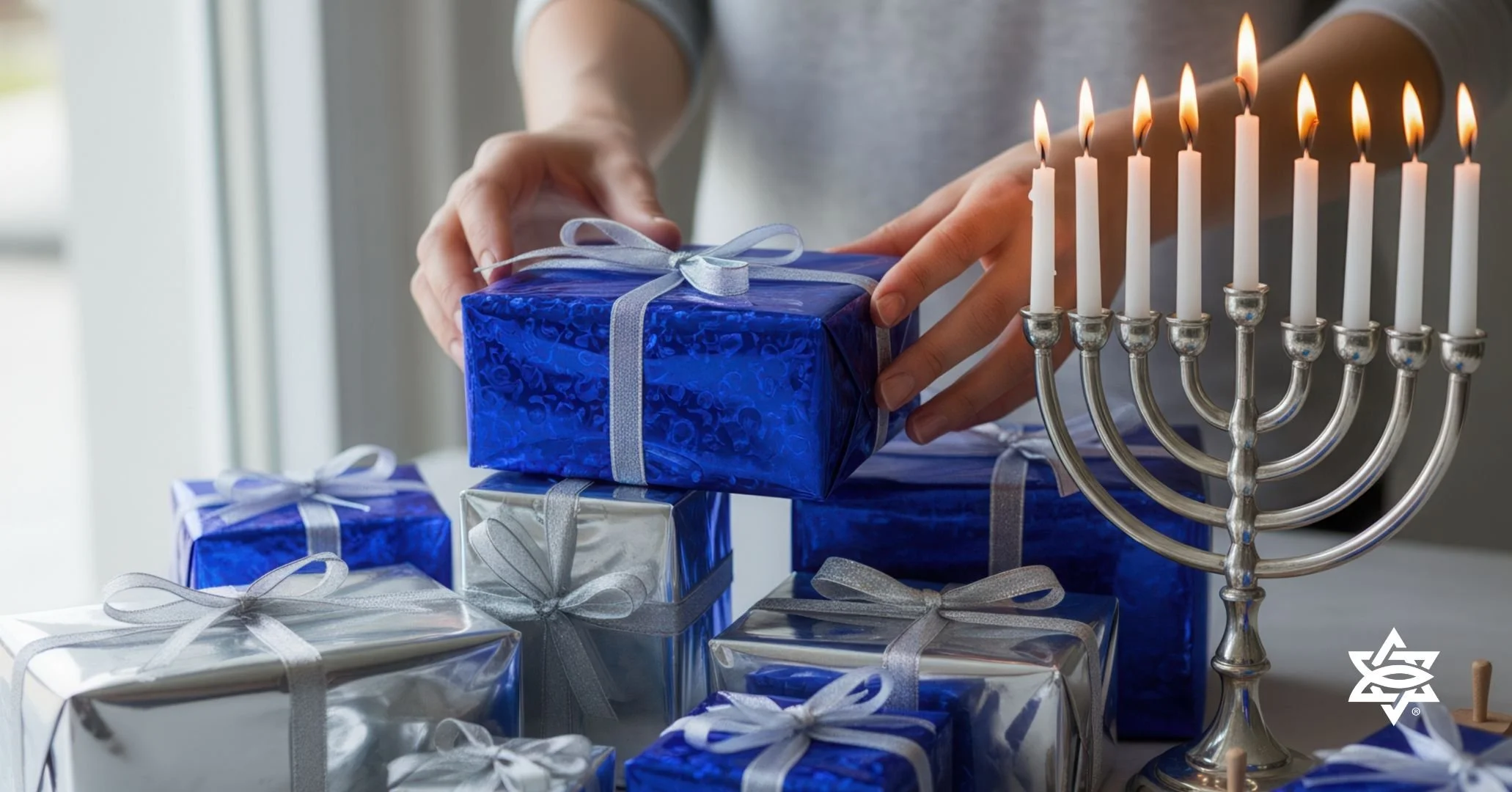
Hanukkah is one of my favorite holidays of the year. I always love decorating our home and finding creative ways to keep the kids engaged with the nightly lighting of the hanukkiah, the nine branched candelabra. They each have their own, so we go through a lot of candles that week!
Hanukkah has many fun traditions each year, including eating oily foods, playing the dreidel game, and giving gifts. In our family, I try to not to add too much “clutter to the chaos” when it comes to gift giving, so instead of presents, each evening I plan a special activity for our family to do together instead (such as playing a board game, doing a scavenger hunt, or watching a movie).
However, one year when my parents came to visit us, they graciously brought each of my three boys one present for each night of the eight nights of Hanukkah – 24 presents for the week! You can imagine how excited my boys were to open each and every one of these “earthly treasures.” While I was touched by their incredible generosity, I also found myself inwardly groaning a bit. This would certainly give me the “gift” of opportunity to reorganize our toy room!
While receiving new things can be very exciting (especially for little ones!), there is another gift we can celebrate that is not only exciting, but truly life changing as we think about the holiday of Hanukkah. Below is a quick recap on the history of Hanukkah before diving into this important truth.
After Alexander the Great died in 323 BC, his vast empire was divided among his four generals. The area that included Israel (Judea) eventually came under the control of the Seleucid Empire (one of the four divisions).
Many years later, a Seleucid ruler named Antiochus IV Epiphanes (who reigned from 175 BC to 164 BC) rose to power. He gave himself the title Epiphanes, meaning “God Manifest,” and demanded the Jewish people abandon their faith and worship the Greek gods, including himself! Antiochus also desecrated the Temple in Jerusalem, outlawed Jewish practices such as circumcision and Sabbath observance, and sacrificed a pig on the altar, defiling it with unclean blood.
In response, Mattathias, a Jewish priest, and his five sons (most notably Judah/Judas Maccabee) led a revolt against the Seleucid Empire. After Mattathias’s death, Judah took command of the resistance, and fought the Greek army for many years. Eventually, the Maccabees were victorious!
However, when they came back to Jerusalem (around 164 BC), everything had been utterly destroyed and the Temple needed to be rededicated. As tradition tells, the Maccabees only had a small amount of consecrated oil – enough to keep the menorah burning for one day only. Yet miraculously, it lasted for eight days! This is the miracle that became the basis for the eight-day celebration of Hanukkah, which means “dedication.”
There is another story from this period recorded in 4 Maccabees 8-18. Even though the Books of Maccabees are ancient manuscripts and not part of the authoritative Scripture, this story is still meaningful and applicable to our lives today.
During the cruel reign of Antiochus IV, a Jewish mother and her seven sons were commanded to abandon their faith and eat pork. One by one, each son refused, choosing death over disobedience to God’s law. As they were tortured and killed, their mother stood firm, urging them to remain faithful, and reminding them that obedience to God is worth more than life itself. Each son faced death with courage, trusting in God’s promise of resurrection.[1] When all her sons were gone, the mother also gave her life, steadfast in faith; her courage remains an example to us today.
As I look forward to celebrating the upcoming Festival of Lights with our family, I am reminded that while gifts and possessions are enjoyable and can hold meaning during our time here, the greatest gift we can share is far more lasting than our earthly treasures – the gift of God’s love and the truth of His salvation. Though Yeshua (Jesus) came after the days of the Maccabees, the faith and courage of the Maccabees and their community still shine as an example of steadfast devotion to God’s Word. They valued eternal truth over temporary comfort, and their legacy reminds us to do the same.
So whether you yourself are lighting a hanukkiah this year, or you see them shining brightly in the windows of your Jewish friends and neighbors, may we remember the most precious gift is not found in what we receive, but in what we share – the eternal hope found in Yeshua.
Written by Hannah, Life in Messiah staff
With whom can you share Yeshua’s love and salvation during this holiday season?
Wondering how you can share Yeshua’s love specifically with your Jewish friends and neighbors? Here are some great resources on Jewish evangelism to start.
To learn more about Hanukkah and its significance to believers, click HERE.
Endnotes:
[1] In Jewish thought during the time of the Maccabees, there was already a growing belief in the resurrection of the righteous – that God would one day raise the faithful to eternal life. This hope is reflected in Scriptures such as Daniel 12:2 and Isaiah 26:19, and is clearly expressed by the Maccabean martyrs in 2 Maccabees 7:9, who declared, “The King of the universe will raise us up to live again forever, because we are dying for His laws.”