

A Tale of Two Passovers
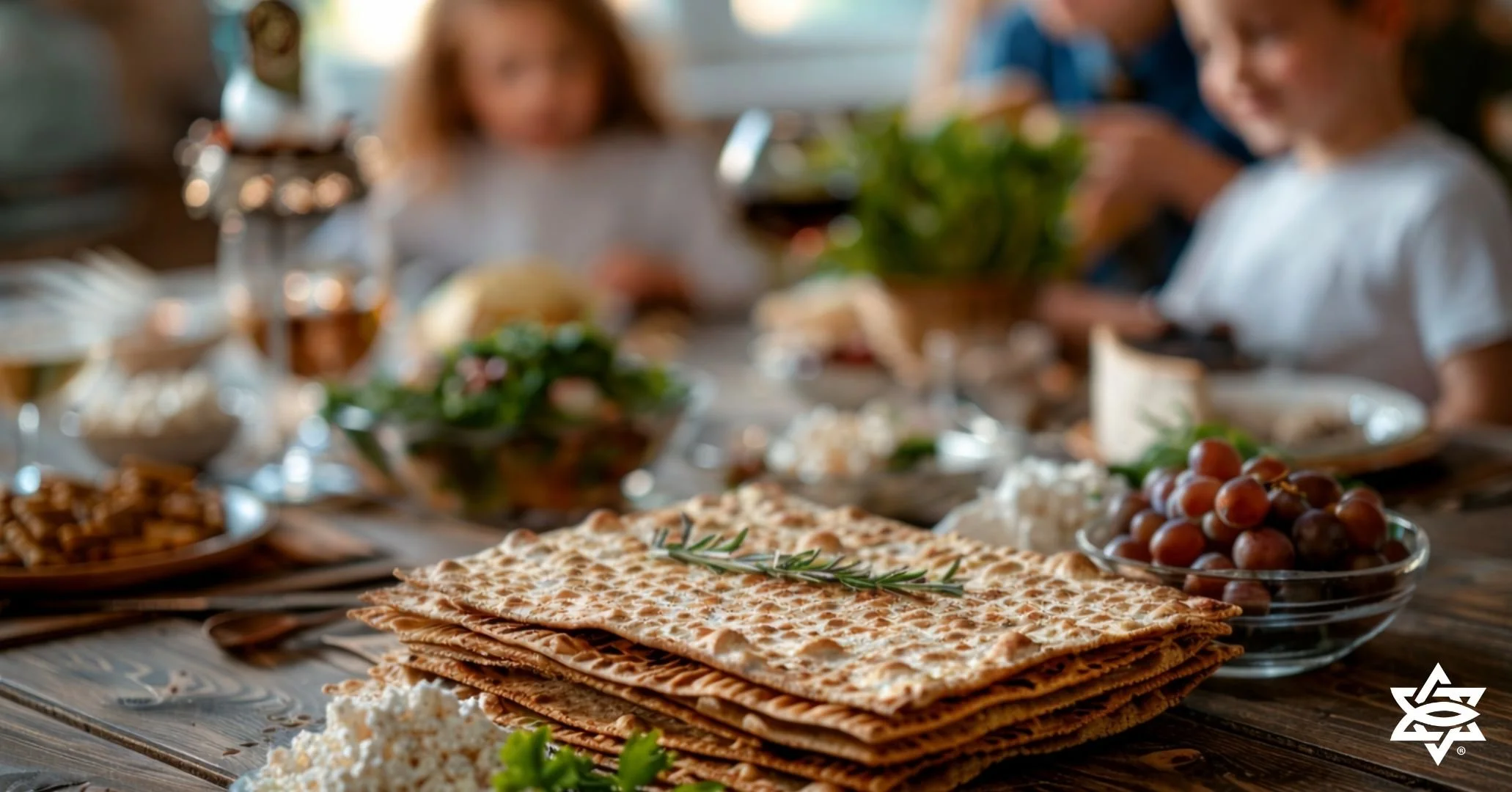
Lori and I, accompanied by our (then) two children Joshua and Jennifer (aged 3 and 1, respectively), moved to Israel in August 1980. The following spring we were invited by Life in Messiah's attorney, Meir Winograd, to his home for our first Pesach (Passover) in Jerusalem.
The Winograds lived in the upscale neighborhood of Rehavia and were gracious hosts. On every wall of their lovely apartment, including hallways, hung dozens of drawings and paintings. Meir explained he collected artwork of both already- and not-yet- famous Israeli artists. Their home was a virtual art museum.
Meir’s wife, Hannah, had set a beautiful table for the holiday. The aromas wafting from the kitchen promised a tasty feast. But at Passover, the story of God's redemption of His people from Egyptian bondage must first be told.
We sat at the dining table, everyone nicely dressed for the occasion. Hannah picked up matches and said the traditional prayer for lighting the tapered candles in the center of the table. Her sleeve did not cover the tattoo on her inner left forearm. This was a Nazi-incised number, not a work of art; our hostess was a Holocaust survivor.
We picked up our Haggadahs – the traditional booklet which for centuries has aided celebrants to follow the seder (order) of the evening – and Meir began to read. He knew we were only beginning to learn Hebrew, so he patiently took time to not only translate into English but also fill in relevant explanations beyond what the text expressed. A scholar in his own right, Meir was a fascinating instructor.
After only a few pages had been turned in the Haggadah, the Winograds’ young adult sons Yair and Itai, grew restless. It's typically about an hour from candle-lighting to eating, but the boys could see at the rate Meir was going it easily would be double that time. And Hannah's luscious dinner was being kept warm in the oven only meters away.
“Let us read, Abba!” they suggested. With Meir's consent, the boys took turns speed-reading through pages of the story without a break. My beginning Hebrew skills could not keep up with the pace. But when they turned a page, so did we. Every now and again, Meir would insert a helpful comment to keep us informed of our progress.
We had already led Seders in our four years of ministry in Miami, so we were familiar with the Seder – but not this rapidity! The Winograds were masorti (traditional) Jews, so they observed many of the Jewish customs, traditions, and holidays, but were not observing all the rabbinic regulations of Orthodox Judaism. It was obvious that the boys were happy to get to their main objective of the evening: eating mom's great cooking.
The meal did not disappoint. Round after round of steaming dishes were transported to the table: chicken, beef, and fish were served, along with vegetables and fruit. No pork, of course, though “white meat" was surreptitiously offered to Lori when she shopped in the shouk (outdoor market). And while lamb was part of the original Passover menu in Exodus 12, Jewish people do not eat lamb at Passover since the temple was destroyed by the Romans in AD 70. No temple sacrifice = no Passover lamb.
Following the feast, we sang a refrain of a traditional song or two as we finished the Seder. But there was no “L'shana habaya b'Yerushalaim" (“Next year in Jerusalem”) to close the evening as has been intoned throughout the millennia in the diaspora. We were in Jerusalem, after all.
By Passover 1982 we had grown to a family of five.[1] Kathryn Shoshana was not a month old when we arrived at 55 Prophets Street to celebrate the holiday sometimes referred to as zman heruteinu “the time of our deliverance.” The Christian and Missionary Alliance began ministry in Jerusalem in 1890. By 1913 the large complex built of Jerusalem stone included the Evangelical Alliance Church and a substantial guest house had been completed.
Warren and Linda Graham, veteran C&MA workers, had endeared themselves to us from our first days in Israel. Their duties included hosting guests in the guesthouse where they and their family had their own apartment. We had enjoyed their hospitality previously, but it was a delight to be invited for Pesach along with several other believers in Messiah Jesus.
As at the Winograds’, we enjoyed a festive meal and retold the Exodus story following the traditional Seder. But the difference this time in recalling God's protection, provision, and redemption was the vibrancy and relevance to our day as the connection of the original Passover with the Lord's Supper was clearly laid out. Messiah Jesus inaugurated the New Covenant in His blood at a Seder with His disciples in the Upper Room – just a few minutes' walk from where we sat that night.
In addition to prayers of thankfulness to the God of Israel for preserving the Hebrew people and bringing them into Canaan, our intercession included beseeching Israel's God to redeem His people whom He has restored to the Promised Land. When a child was sent to the door to see if Elijah had arrived, we were reminded of God's promise to send the prophet as a forerunner of Messiah – which role the Lord Jesus told His disciples had been fulfilled in the ministry of John the Baptist who came in the spirit and power of Elijah.[2]
Over the decades since, we have celebrated Passover dozens of times as we've presented Messiah in the Passover Seders in churches and homes across America. Of course, we always desire for those experiencing Passover for the first time to see the connection to Jesus. As Paul writes in 1 Corinthians 5:7, “For even Messiah, our Passover, has been sacrificed for us.”
For indeed, God's instruction to the Israelites in Egypt was to kill the Passover lambs so their blood could be applied to the doorposts and lintels of the Hebrews' homes in Goshen so death would not touch their firstborn sons. “When I see the blood, I will pass over you" (Exodus 12:13) was God's promise when the 10th plague struck Egypt.
In the same way, the shed blood of Jesus, applied to our hearts by faith in His atoning work, cleanses us from all unrighteousness (1 John 1:7). Would you pray with us that the “tale of two Passovers" will be the experience of even more of our Jewish friends as we seek to point them to the Lamb who is worthy to receive “…honor and glory and praise" (Revelation 5:12)?
Written by Wes Taber, Life in Messiah Global Ambassador
Have you participated in a Messiah in the Passover presentation? If you don't know of one around you, check out Life in Messiah's on-line interactive Seder.
This is a great time to wish your Jewish friends a Happy Passover. This year Passover began on the evening of April 1 and ends April 9.
Endnotes:
[1] In 1984, Christine Amanda was born in Chicago when we were living in the old American Messianic Fellowship headquarters building. AMF adopted the Life in Messiah brand in 2008.
[2] Compare Matthew 11:13-14 with Malachi 3:1 and 4:5-6; also Luke 1:13-17.