

Sukkot, the Feast of Tabernacles, is my favorite Jewish holiday. Most years the feast’s most memorable spiritual lessons come during the seven-day celebration.[1] But this year it came early.
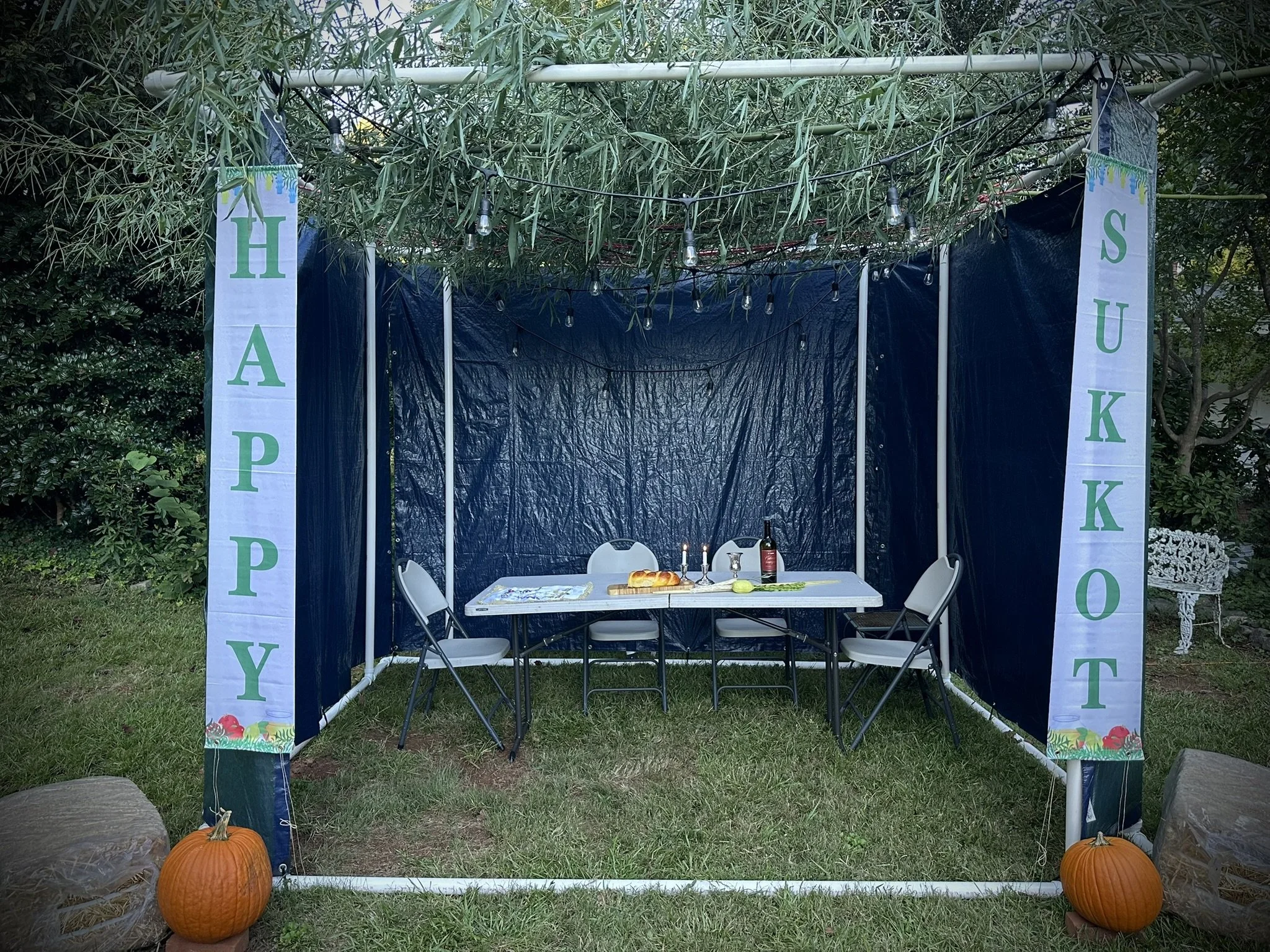
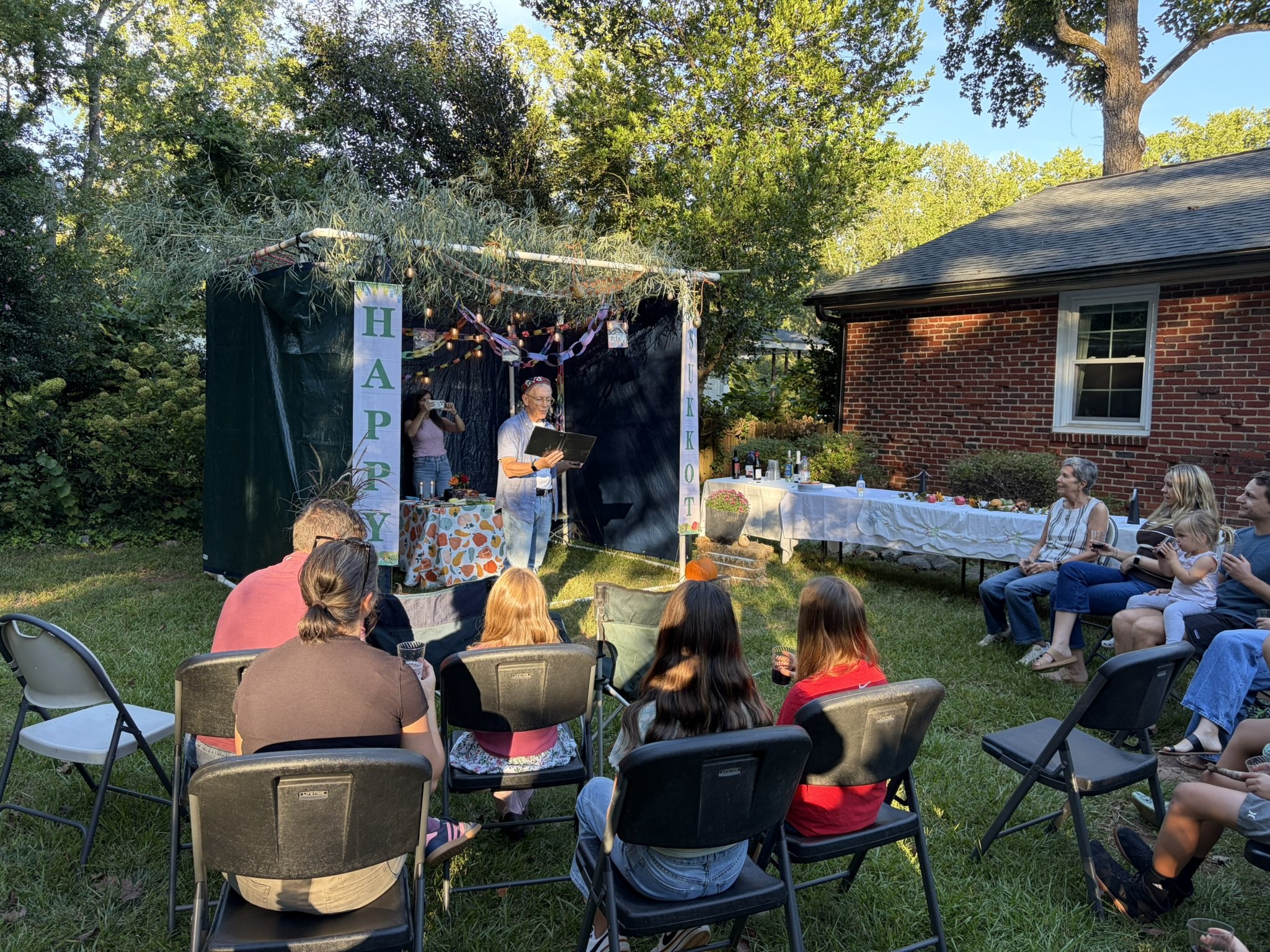
Our family sukkah (a temporary booth/tabernacle) is constructed of white PVC pipe and three blue and green vinyl tarps, which are all held together with a few screws, zip ties and bungee cords. These durable materials live in our home’s crawl space and are used each year. But the roof of the sukkah is organic freshly cut bamboo harvested from an unkempt corner of our backyard (a couple pictures of our sukkah below).
As I hacked my way through a year’s worth of vines, volunteer trees, and shrubs to cut down and extract a dozen sturdy bamboo stalks, I thought to myself, “Why don’t I do something useful with this space?” So, I began researching what the clearing process would entail and was shocked to discover the intractable nature of bamboo. Cutting it down is easy. Getting rid of it? Not so much.
I learned that, unlike typical tree or shrub roots, bamboo takes its nourishment from the soil via something called rhizomes. Thus, unlike the shrubs we’ve successfully removed from our front yard, digging around a bamboo plant and uprooting it doesn’t irradicate it. Bamboo’s rhizomes grow horizontally, allowing it to reproduce asexually. Just a few shards of rhizome remaining in the soil guarantees more bamboo!
This was good news for next year’s sukkah roof, but spelled frustration for my land-clearing aspiration. As I anguished over this dilemma, it dawned on me that bamboo is just like my sin nature – intractable!
We all experience this reality. Our struggle with sin is like the “Whack-a-Mole” arcade game. Just when we think we have a handle on one sin, up pops another. Just as I see progress in being more “other-centered,” I catch myself taking the largest piece of cake for myself or failing to notice an opportunity to serve or encourage someone in need. Sometimes I get tired of being me, and hopelessness creeps in.
None of us is exempt from this struggle, even the Apostle Paul who penned: “For what I am doing, I do not understand; for I am not practicing what I would like to do, but I am doing the very thing I hate… the willing is present in me, but the doing of the good is not… Wretched man that I am! Who will set me free from the body of this death?” (Romans 7:15, 18b, 24).
Thankfully, just as I saw my hopelessness in the sukkah’s bamboo, I also saw the hope to which Sukkot points. Sukkot is the caboose of the biblical calendar of seven feasts (Leviticus 23) and is a time of great rejoicing in God’s provision. Its name is derived from the temporary booths mentioned earlier [singular sukkah, booth or tabernacle] in which God commands Israel to live during the feast.
Dwelling in a sukkah for the seven-day feast reminds us as Jewish people of God’s provision during our forty-year wander in the wildness. The sukkah’s flimsy construction helps us remember that God is our only security rather than the homes and possessions we are prone to trust.
But Sukkot also points us to the future and hope for change. God’s prophet Zechariah gives us a hint of this change by connecting Sukkot to Messiah’s Millennial Kingdom. When Messiah reigns on earth, Israel’s former enemies will be required to bring an offering to the Lord in Jerusalem during Sukkot. Any nation failing to do so will suffer God’s discipline in the form of drought (see Zechariah 14, especially verses 16 and following).
In this way, Sukkot looks ahead to a radical and positive change in Israel’s relationship with God and her historic enemies. But how?
This connection between Sukkot and rain is especially significant. As an agricultural festival, Sukkot became the occasion on which the nation of Israel prayed to God for rain in the coming year. On the seventh day of Sukkot, known as the Great Day of the feast, the high priest took a golden pitcher in hand and walked from the Temple mount down to the pool of Siloam. He then filled the pitcher with water and walked back up to the Temple.
Throughout his journey, thousands of Jewish worshipers lined the street, surrounded the pool, and filled the Temple’s courts. They continually cried out, “Hoshia na, hoshia na!” (“Save us, save us!”) beseeching God for rain.
Upon the high priest’s return to the Temple court, he raised the golden pitcher above his head, pouring out the water beside the altar. To ensure every drop was poured out in supplication before God, the crowds cried out, “Lift your hand! Lift your hand!” The people understood the life-giving necessity of water.
This ceremony is the backdrop for Jesus’ explosive proclamation recorded in John 7:
Now on the last day, the great day of the feast, Jesus stood and cried out, saying, “If anyone is thirsty, let him come to Me and drink. He who believes in Me, as the Scripture said, ‘From his innermost being will flow rivers of living water.” But this He spoke of the Spirit, whom those who believed in Him were to receive; for the Spirit was not yet given, because Jesus was not yet glorified. (John 7:37–39)
The “How?” of Israel’s transformation – and ours – comes through Messiah. Even as the bamboo of my sukkah’s roof served as a reminder of our struggle with sin, Sukkot’s message points to the hope we crave. It assures us that the God who provided miraculously for Israel’s physical needs also provides exceedingly abundantly for our spiritual needs in Israel’s Messiah, Jesus, the Word of God who became flesh and “tabernacled among us” (John 1:14).
With Sukkot in the rearview mirror, and as Israel’s rainy season approaches, join us in praying God will use Life in Messiah’s faithful field workers to awaken Jewish people to the “rhizome nature” of sin… and to the life-giving Water our Messiah provides! May more and more people proclaim with the Apostle Paul:
Wretched man that I am! Who will set me free from the body of this death? Thanks be to God through Jesus Messiah our Lord… Therefore there is now no condemnation for those who are in Messiah Jesus. (Romans 7:24–8:1)
Written by Dan, Life in Messiah Board Member
Just as bamboo rhizomes can remain hidden beneath the soil, what sinful attitudes or habits might be taking root beneath the surface of your life?
How does the promise of the Holy Spirit change the way we approach our daily struggle with sin?
As you consider the spiritual hope pictured in Sukkot, will you pray for Jewish people to recognize their need for the life-giving Water that only Messiah Jesus provides? For more ideas of how to pray, click HERE.
Endnotes:
[1] Sukkot was observed in 2026 from sundown on Friday, September 25, through nightfall on Friday, October 2.