

The biblical calendar marks time in recurring cycles: weekly Sabbaths, monthly new moons, annual celebrations of the Lord’s appointed feasts, and the agricultural seventh-year “Sabbath rest.”
One event stands out for its relative infrequency: the year of Jubilee (from the Hebrew Yuval). Here is God’s instruction in Leviticus 25:
8 You are also to count off seven Sabbaths of years for yourself, seven times seven years, so that you have the time of the seven Sabbaths of years, that is, forty-nine years. 9 You shall then sound a ram’s horn abroad on the tenth day of the seventh month; on the Day of Atonement you shall sound a horn all through your land. 10 So you shall consecrate the fiftieth year and proclaim a release throughout the land to all its inhabitants. It shall be a jubilee for you, and each of you shall return to his own property, and each of you shall return to his family.
Of note, God instituted Israel’s calendar just before delivering them from Egyptian bondage. In Exodus 12 He describes “the beginning of months” as Aviv, in early spring. Passover is thus the first holiday on the Jewish religious calendar, followed three days later by the Day of Firstfruits during the Feast of Unleavened Bread. Fifty days later came Shavuot (the Feast of Weeks, or Pentecost). Then the fall feasts begin with Trumpets (today’s Rosh Hashanah), with Yom Kippur (Day of Atonement) 10 days later. And on that day the trumpet was to be sounded after 49 years had been counted, signaling the Year of Jubilee had begun.
The implications of Jubilee were extensive. Leviticus 25 continues:
Moses lived to 120 years – far short of Methusaleh’s 969. But lifespans shortened to the point where Moses in Psalm 90 described the more normal “three score and ten and if by strength fourscore” years. That meant most Israelites would experience one Jubilee in their lifetime. How those who out of necessity had mortgaged their properties or had indentured themselves must have looked forward to the year of release, restoration, and freedom!
The proclamation of liberty recorded in Isaiah 61:1-2a was quoted by Yeshua (Jesus) as He began His public ministry in Nazareth:
“The Spirit of the Lord God is upon me,
Because the Lord anointed me
To bring good news to the humble;
He has sent me to bind up the brokenhearted,
To proclaim release to captives
And freedom to prisoners;
To proclaim the favorable year of the Lord.”
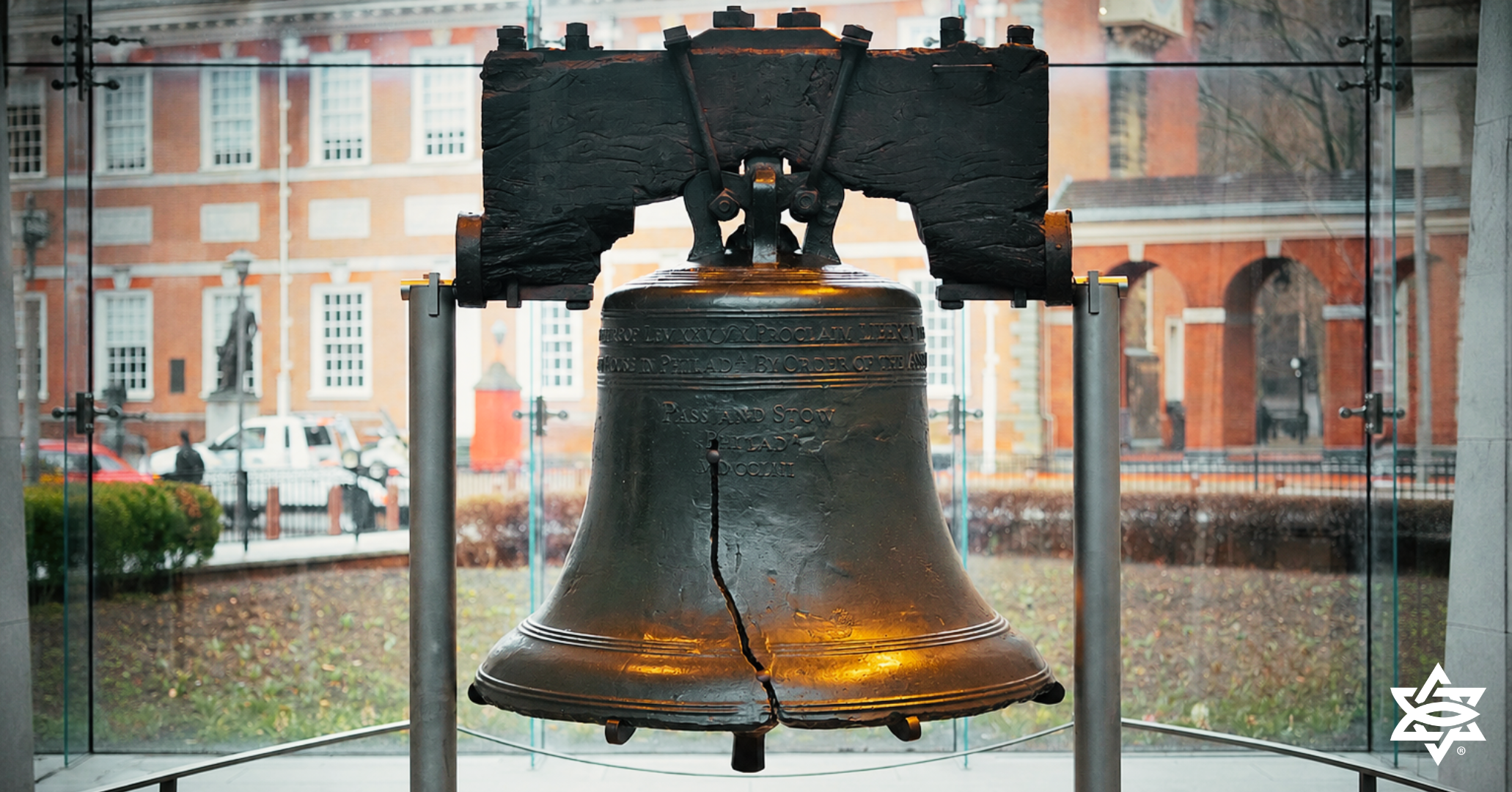
“Proclaim liberty throughout the land” is inscribed on Philadelphia’s Liberty Bell. America, “the Land of the Free,” celebrates 250 years on July 4. But freedom loosed from a moral foundation soon devolves to license. This country, blessed in so many ways by the biblical principles which informed the Constitution, stands in jeopardy of being eroded from within. Losing long-cherished freedoms are at risk when the fear of God is lost.
Jubilee was a “favorable year of the Lord” and surely those released from servitude or captivity would rejoice at their freedom. How much more should believers in Messiah Jesus, as those once “held captive by Satan to do his will” (2 Timothy 2:16), revel in being freed from the shackles of the “sin that so easily entangles” (Hebrews 12:1)! “So if the Son sets you free, you really will be free” (John 8:36).
Moses had the insight of years when he penned, “So teach us to number our days, that we may present to You a heart of wisdom” (Psalm 90:12). We fill our calendars with tasks, appointments, and special events. We celebrate birthdays and anniversaries (Lori and I completed 50 years of marriage this year). With each passing year, the calendar pages flip with increasing speed, hurtling us ever closer to the end of this life.
None of us is promised tomorrow. May the Lord help us to live with an eternal perspective. When God’s glory is our highest goal, this life is most meaningful – and is the best preparation for the world to come.
Written by Wes Taber, Life in Messiah Global Ambassador
How does the structure of Israel’s calendar (Sabbaths, feasts, Jubilee) reflect God’s pattern of rest and redemption?
What does it mean personally to live in the “freedom” described in John 8:36 in everyday life?
How can believers today “number their days” in a way that shapes priorities for God’s glory?