
It Was “Just” a Passover Seder… Until it Wasn’t
My husband Scott walked into the foyer of the church and was greeted by a small group of volunteers. “It smells like my mom’s house!” he exclaimed.
This was met with the response: “Oh, good! So that means we are doing it right?”
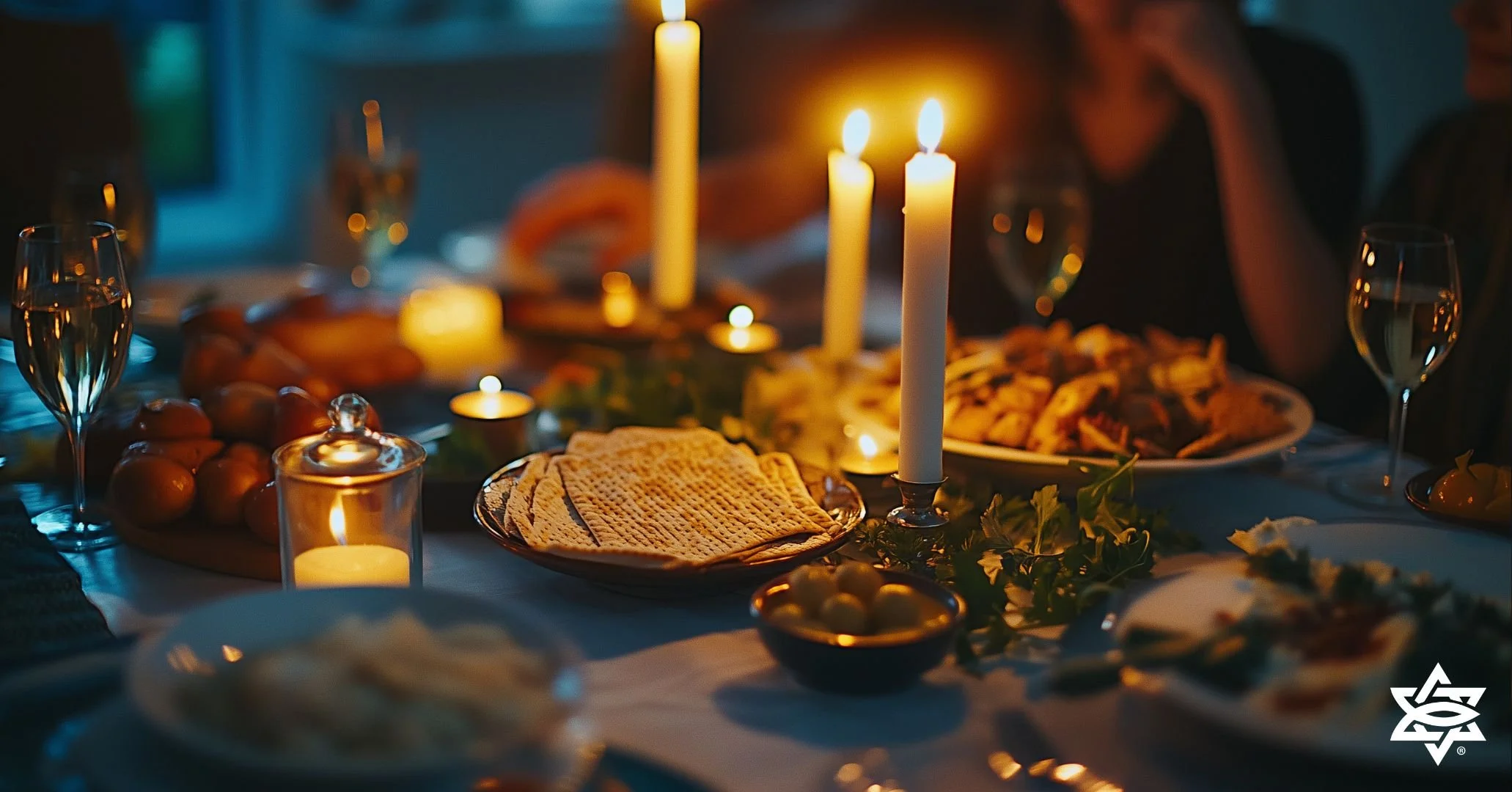
The pastor's wife had been busy making matzo ball soup, and its aroma filled the room. Opening the church up for a special event like a Messiah in the Passover Seder[1] with its specifications can feel like a daunting task to some, but this team took on the Seder traditions with joy. The Passover dinner looked complete with all the elements: matzo ball soup in the works, matzah, horseradish, salt water, bitter herbs, and a yummy main dish... not to mention desserts! The table settings were perfect. The only thing missing was family. That quickly remedied itself when the church doors swung open, and the empty seats were filled with church family.
The Passover Seder began with its traditional blessings and prayers in the Haggadah (a small booklet used during the Passover Seder that tells the story of Israel’s exodus from Egypt and guides the order of the meal). Participants tasted the salt water and braced themselves for the bitter herbs, reminding them of the tears shed by the Jewish people under their bitter slavery in Egypt. They participated in the breaking and hiding of the afikomen.[2] These important symbols all point to the Messiah, Jesus.
As Scott scanned the room, he noticed many heads nodding in agreement with what was being shared, but one woman had an inquisitive look on her face.
He continued with the retelling of the Exodus, which celebrates God’s divine provision in rescuing the Jewish people from Egypt while also pointing to a greater deliverance that would come at the Last Supper – a Passover meal where Jesus would establish a New Covenant with humanity through His own blood. Scott led the church body through the Haggadah to the joyful song “Dayenu,” which means “It would have been enough for us.” The Seder then paused for the dinner meal.
Before Scott had a moment to think, the woman with a curious look on her face was standing in front of him. “It looks to me like this is a perfect picture of Jesus from the Old Testament. How can this be? How could our people have missed this?”
“Of course!” Scott registered, “She’s Jewish!”
A dear friend from this church family had invited her unsaved Jewish friend, *Rivkah, to the Messiah in the Passover Seder.
Scott’s conversation with Rivkah was like walking into an orchard where the fruit is ripe for the picking. God had been working in her life through this sweet friend who was bold enough to share the good news of Jesus, the Messiah, with her.
Scott asked Rivkah if she had ever read Isaiah 53. She had not, so he opened his Bible and began to read to her from the Scriptures. “Who does this sound like it’s describing?” he asked.
Rivkah answered quickly. “Well, it sounds like the prophecy is talking about Jesus… but how have our people missed this? If Jesus is the Jewish Messiah, why did we as Jewish people not ‘esteem Him?’” she asked, pointing to Isaiah 53:3.
This prompted Scott to turn in his Bible to John chapter 1, and they read verses 9–13 together.
“The true light, which gives light to everyone, was coming into the world. He was in the world, and the world was made through him, yet the world did not know him. He came to his own, and his own people did not receive him.”
At the reading of this verse, Rivkah’s eyes filled with tears. They continued with the rest of the passage.
“But to all who did receive him, who believed in his name, he gave the right to become children of God, who were born, not of blood nor of the will of the flesh nor of the will of man, but of God, who were born not of blood nor of the will of the flesh, nor the will of man, but of God.”
The second time Rivkah read the words, “but to all who did receive him,” she stopped.
“If you receive Him,” Scott iterated, “you will become a child of God. Rivkah, do you want to receive Jesus and become a child of God? Do you believe?”
“Yes!” Rivkah eagerly replied.
So it was then – right there in the middle of a Passover Seder – that Rivkah passed from death to life while praying the sinners' prayer. Her debt was paid by the blood of the spotless lamb of God. It was a Passover that Scott will never forget.
What is unseen in this story is the “unsung hero.” She sat in the background, quietly observing and waiting for Scott and Rivkah’s conversation to wrap up. Tears filled her eyes as she celebrated Rivkah’s new life. *Phoebe had been friends with Rivkah for a long time. She had courageously shared her faith and her life with her friend; she was a walking testimony of her living faith in Jesus.
Also unseen were the countless hours of prayer from this sweet church family for Rivkah’s heart to be softened and her spiritual eyes to be opened. This loving church body set the Seder table and filled the dishes with delicious food. Their doors were open and the invite was accepted. It reminds me of the passage:
“How then will they call on Him in whom they have not believed? How will they believe in Him whom they have not heard? And how will they hear without a preacher? How will they preach unless they are sent?” (Romans 10:14-15).
Rivkah’s coming-to-faith story is one of how God uses ordinary people walking in humility, faith, and obedience to accomplish His will. As Passover is quickly approaching, I challenge you to consider: Is there a Jewish friend you know who needs to hear the life-changing message of the Lamb of God, who takes away the sins of the world?
Set the table, prepare the matzo ball soup, and send the invitation.
Written by Kori, Life in Messiah Staff Member
*indicates a pseudonym
Why do you think the Seder setting was meaningful for Rivkah’s understanding of the gospel?
How does the passage in Romans 10:14–15 challenge believers today?
To learn more about why Passover should matter to believers, or even why Christians may host a Passover Seder, click HERE. This page also has resources for hosting your own Seder. Life in Messiah’s Messiah in the Passover Seder helps believers (and not-yet-believers!) experience the symbolism of the Passover elements and how this ancient biblical feast points to the Jewish Messiah. Life in Messiah offers an online interactive Messiah in the Passover Seder you can take part in (alone or with friends) HERE.
Endnotes:
[1] A Seder is a special ritual meal that Jewish families share during the holiday of Passover. The word “seder” comes from the Hebrew word seder (סֵדֶר), which means “order.” To learn more about Life in Messiah’s Messiah in the Passover Seder, please see #3 above.
[2] To learn more about the “mystery” of the afikomen, click HERE.