

Be a Piece of the Peace
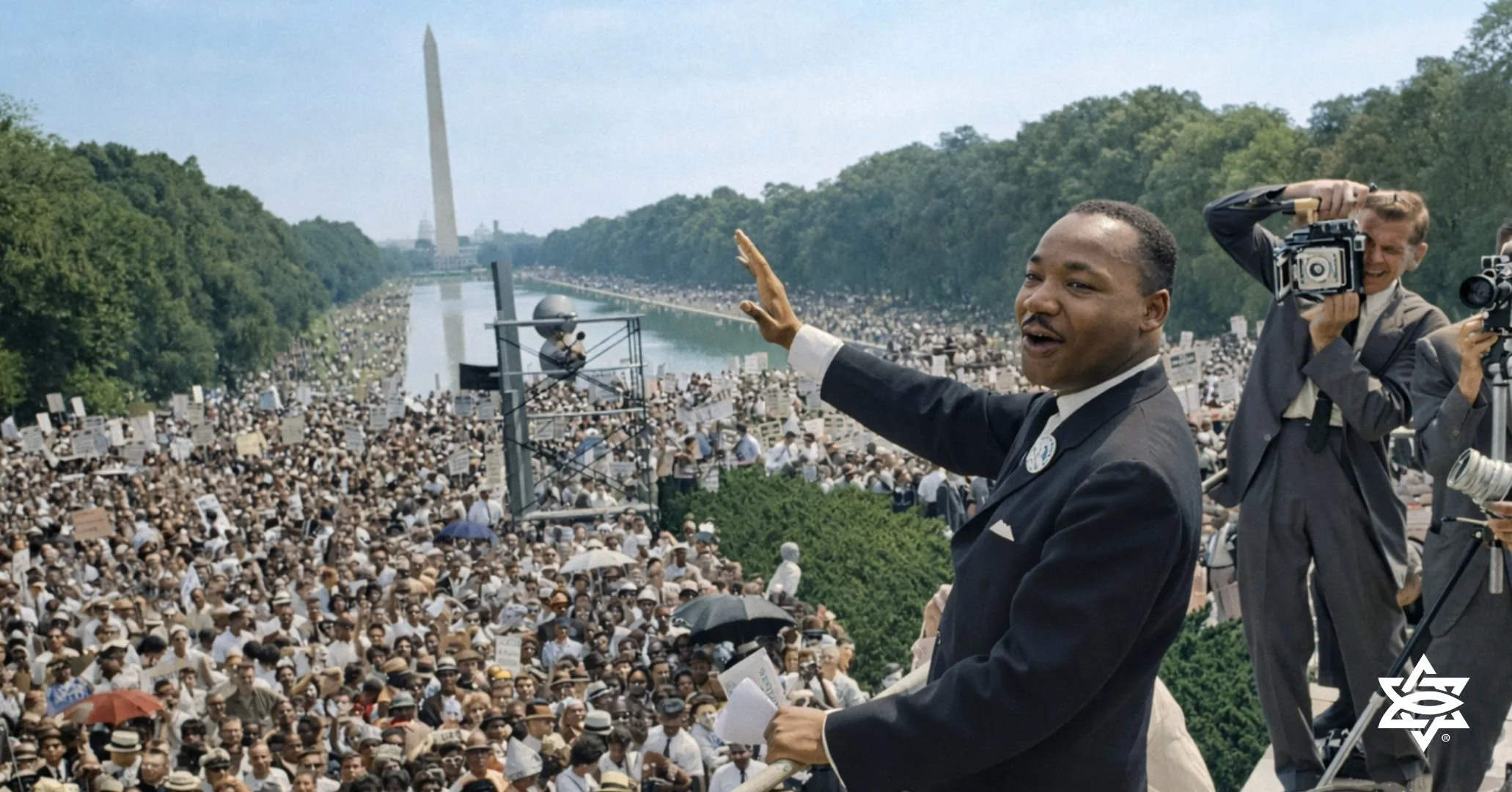
In the United States, Martin Luther King Jr. Day is often anticipated as a welcome day off from school and work – a chance to relax and enjoy a long weekend.
However, when we consider the man and the work he did, the holiday has a much deeper meaning to commemorate the life he lived. Rev. Martin Luther King Jr. (1929-1968) was very instrumental in the American Civil Rights movement and desired to use nonviolent resistance to fight for racial equality and justice. He hoped for a day that all people would have equal access to opportunity and justice, regardless of their race, gender or economic background.[1]
Through his efforts and commitment to nonviolent activism, landmark legislation was passed. This included the Civil Rights Act of 1964, which ended segregation in public places and employment, and the Voting Rights Act of 1965, which protected Black Americans’ right to vote.[2] Of course, MLK Jr. was a man, fully human, and did not live a perfect life. However, he took a stand to make this world a more peaceful place.
A far more influential figure who provided the divine blueprint for “peace on earth toward men of good will” is Yeshua (Jesus), the perfect Son of God. In Matthew chapters 5–7, known as the Sermon on the Mount which includes the Beatitudes, Yeshua shared teachings that emphasize peace, reconciliation, and love in our broken world. A few verses that highlight this message include:
Matthew 5:9: “Blessed are the peacemakers, for they will be called children of God.” (Be one who actively works for reconciliation and harmony.)
Matthew 5:44: “But I say to you, love your enemies and pray for those who persecute you.” (Have radical love toward those who oppose you.)
Matthew 6:14–15: “For if you forgive others their trespasses, your heavenly Father will also forgive you, but if you do not forgive others their trespasses, neither will your Father forgive your trespasses.” (Forgiveness is essential for inner and relational peace.)
Matthew 7:12: “So whatever you wish that others would do to you, do also to them, for this is the Law and the Prophets.” (Treat others as you want to be treated, fostering interpersonal peace.)
When Yeshua shared these messages, it echoed the experience of Moses. Moses spent forty years in the wilderness, while Yeshua spent forty days being tempted there. Moses ascended Mount Sinai to receive the Law and the Ten Commandments; Yeshua sat on a mountain to share teachings that would bring humanity into harmony with God. He was not abolishing the Law, but rather emphasizing the importance of living a life devoted to God’s Word and commands (Matthew 5:17–20) – which only He perfectly fulfilled.
As believers, we are called to be a blessing to all those around us through acts of lovingkindness, living out the good works God has prepared for us, as described in Ephesians 2:10: “For we are His workmanship, created in Messiah Jesus for good works, which God prepared beforehand so that we would walk in them.” These daily acts of love reflect God’s heart and purpose for His people in the present world. While we faithfully serve now, we also hold onto the hope that one day the world will be fully restored in peace, when Yeshua ushers in the new heaven and the new earth.
So I would like to encourage you: if you have a long weekend for MLK Jr. Day, consider that this federal holiday was intended to be a “day on,” not just a day off. It was designated as a day of service – a time to volunteer and invest in improving one’s community. How can you use this time, or any time, to positively impact those around you? By choosing a “day on” rather than a day off, we align ourselves with the teachings of Yeshua – serving others and living in a way that brings honor and glory to God.
Written by Hannah, Life in Messiah Staff Member
When you think about MLK Jr. Day, do you tend to see it as a “day off” or a “day on”? Why?
How can our acts of service towards others become opportunities to reflect God’s love rather than simply being considered “good deeds”?
How do Yeshua’s teachings in the Sermon on the Mount challenge the way you typically respond to conflict or injustice?